I was recently contacted by Miyuki Baker, a student at Swarthmore, who wanted to interview me for her website about being Asian, Gay, and Proud. (You can go directly to her website and the interview here. It's looks better and is easier to read.) It took about a month for us to be able to find a time to talk that worked for both of us, but eventually, we made it happen. And I am glad that we did. I'm also glad that I had that month to think about her questions. Through my own reflections and conversations with others, I tried to think of how I could articulate my own thoughts and changes and identities in ways that would be sincere and hopefully helpful for others. I was able to write some of the answers to Miyuki's basic questions the night before the interview. The rest is a large part of the conversation that we had over the phone.
Cori Wong, 6/2/11
Cori Wong grew up in Boise, Idaho, studied philosophy at Colorado State as an undergrad, and is currently a graduate student at Penn State University in Philosophy and Women's Studies. A large part of her academic work is motivated by the desire to make philosophical reflection accessible to people beyond the university setting and relevant to real-life experiences. Her approach to public philosophy, or doing philosophy more publicly, is reflected in her coinage of the term, "philifesophy." which aims to capture the interrelatedness of life and philosophy.
In addition to spending time on her own philosophical work, Cori has equally strong passions for food (cooking and eating), dancing, and sitting around cafes having long and enjoyable conversations with friends.
Who? name, age, what you identify as (or not)
Cori Wong, 24.
Though I think labels can do important political work and often help in terms of legitimating identities, I also think that they often are too limiting, inadequately capture one’s experiences, and can create unnecessary anxiety. As a result, I’m loosening up on my own identification. At different times I’ve called myself a lesbian, identified as just “sexual,” and have recently thrown around with the idea of being “pretty queered up.” The last one is funny and subversive all at once. I like that.
What? what do you do for a living or things you would like to do.
I’m a graduate student in Philosophy and Women’s Studies at Penn State University where I specialize in feminist and Continental philosophy. My research centers on affective experiences, embodiment, sexuality, gender, oppression and resistance. I passionately love to learn and to teach, so I hope to continue doing both after I graduate.
When did you come out? Any stories?
I started the slow process of coming out in college. It was relatively smooth for me given that my studies provided me with very helpful language and concepts over the years that enabled me to make sense of, and be really okay with, my own experiences. Once I started being explicit about it with friends hardly anyone was surprised. It took a while longer for my family to feel more comfortable, but again, I think that being able to articulate myself clearly helped our process along. There was one instance that I think counts as my “official,” public coming out moment—it was the last round of a slam poetry contest and I performed a steamy and sentimental poem about a woman (not really anyone in particular). As I walked away from the microphone, I sort of squealed into my friend’s ear, “Oh my, I think I just came out to 100 strangers!”
The strange thing about coming out, though, is that it’s not really just a one-time thing. There are many situations where one has to decide whether and how to repeatedly and continually come out. Sometimes these situations can be frustrating, nerve-wracking, or empowering, and the repetitive quality of coming out is something that many people under-appreciate.
How did coming out impact your career or relationships with others?
I’m fortunate to be on a career path that is pretty open with respect to acknowledging sexual identities. Because my work aims to resist oppressive attitudes about topics dealing with gender, sexuality, and sex (to name a few), I think that being out myself has allowed me to engage more deeply with these issues. Both professionally and personally, my own ability to be open, accepting, and positive about my own identity has probably helped to foster some unique connections with others. In a lot of ways, once I came out I started to “see” a lot more queer people around me (Maybe it’s better “gaydar,” or maybe it’s just the kind of recognition where you pass someone on the street and give each other the, “Hey, we’re cool, we’re family” look...) Other people started to find me, too. I have been approached by numerous others (friends and acquaintances) who have been in the process of trying to better understand their own identities, and I’ve been told that my own comfort and openness made them feel like they could approach me and ask more poignant questions.
Miyuki: Why did you start your youtube channel, "My Philifesophy" and the Think for a Change video series?
Cori: When the September suicides were happening with the young gay boys and Dan Savage started the “It Gets Better” project, I thought for a really long time. It took me over a month actually to finally upload a video to the project because I didn’t know what to say. I really wanted to do something but I just didn’t know what to say. So then I finally realized that I didn’t know what to say because just saying that if you wait and push through, things would get better, felt so empty to me and really dissatisfying. So I felt like we needed to be able to say something more.
For me, it was one particular class that introduced me to feminist and queer theory and so after that I started exploring both of them. That changed my life and I thought, “That was when I was in college. We have to get resources available to younger people when they can’t take the college class.” And so I thought, well, they’re on the internet. Maybe we can put some resources on the internet and maybe that would help. So in my “It Gets Better” video I say “Find resources” and since it’s hard to just say “find resources” without pointing to them, I decided that that was something I’d do--it’s now my task to make resources available. So I read from books that are really good and also try to demonstrate what it is to think and talk through these issues. I wanted to provide the material and lead the questions along.
You know, I really wish there was something more that I could do--and there are advocacy groups out there--but it takes such an effort on the part of a young person to put themselves in the position where they have resources available to them. I’m happy that I had the idea to do this and it’s been getting such good feedback but I also feel like it’s pretty minimal in its reach and capacity right now. The other really scary part of this is that a youtube video is such an insufficient way to have a dialogue.
Miyuki: Since my website is geared towards the coming out process and what it means to be Asian and gay do you have any thoughts on the intersectionality of those two identities? Also what would you advise someone to do to create change when they don’t have the resources that we do or the vocabulary to talk about queerness?
Cori: This question is complicated for a lot of different reasons. First, the intersectionality of those two identities is really complicated because I think Asian American identity is sophisticated and queer identity is sophisticated--bring those two together and it’s going to be a network of different nodes that match up and other ones that don’t. So for me personally, my answers are geared more towards coming out and queer identity because my Asian identity has been less central to my queerness. I’ve done separate work trying to figure out my Asian identity in a similar way that I have done with my sexual identity, because that is itself already another bucket of worms and is really confusing for me. So I think the intersection of the two is important and will be unique and specific for each person, and it can create a different set of challenges and issues that a person would have to work through. But, independent from one another, both identities are challenging enough on their own.
In terms of lacking resources and finding ways to articulate your own experiences, if you don’t have exposure, whether that’s classes or books, it’s such a hard thing because I think that having resources is one of the most important things we can do. I don’t think there’s much we can accomplish if we just sit alone in a room and ponder these things on our very own. You might be able to get yourself somewhere into thinking new ideas but we need to have the dialogue, different perspectives. We need different approaches to open us up to things that we couldn’t have imagined on our own. Like “wow people really do that?” or “people really live that way?” and “that’s possible? I had no idea.” We need to find resources--it doesn’t have to be in a book or in a classroom. And I think it’s just as important to be able to recognize what’s around us and what can possibly be a resource.
When I went to pride for the first time I was so happy that people were wearing leis around their necks because as we decided to go for lunch in downtown Denver, outside of the pride parade area, you’d see all these people wearing leis on the streets and in the restaurants. Anyone else might have thought, “here are a bunch of straight people” and it probably wouldn’t have even enter their minds, but you know that they’re wearing leis because they’ve been to pride! So, in that moment, the leis functioned as a kind of marker that helped me to see differently what is so easily assumed. Though we won’t all be wearing such obvious markers, I think that it is important and beneficial for everyone to be better able to recognize that there are other people with different kinds of relationships, with other identities.
On a similar note, I think that we can do our own work to try to first be able to recognize the differences that are available to us if we don’t have immediate stimulation from resources outside of ourselves. I think that your website and finding resources online and doing a bit of initial work is really important. That’s why I do what I do, and why I think you do what you do, because we need visibility. Not to persuade us and not to tell us what to think and not to give us a handbook on how to do certain things, but only to provoke new ways of thinking and understanding.
Miyuki: At the same time, I think that while we can provide all of these resources, if the person reading or being exposed to it isn’t open-minded, all of these ideas are just going to hit a brick wall. While I was talking to my mom about queer issues this afternoon, she explained her own thought process. We all have the ability to think but we also all have different lenses through which we think. So the lens through which my mom thinks is very much sculpted by traditional Japanese values so even though she thinks a lot as well, it’s hard for her to come to the same conclusions as I do, and that’s where we have our disagreements because I’ll try to explain the way that I see the world but she’ll say “yeah but you grew up here, you have different tools to use when you’re thinking about things.” So as a philosopher, how do you grapple with that kind of cultural difference in the ways that people think?
Cori: That’s a really good question... and it’s reminding me of one of the most difficult conversations I had with my mom during the first year when I came out. She said that she was frustrated and didn’t want to talk about it because she felt that whatever I said I would think that I was right and that she was wrong--that I had to correct her every statement. When you hit a wall like that you recognize that you don’t understand in the same way as another person.
Is it possible to bridge between the two of you and come to some sort of common understanding? When you come together and you say “I’m a thinker, you’re a thinker and we disagree,” you can reach a sort of stalemate and this is really tricky territory because as a philosopher I’m also really skeptical of what it means to be right, or to have a handle on the Truth. So I wouldn’t ever want to tell my mom “I’m right and you’re wrong.” Most importantly, I’ve become very pragmatic in the sense that I try to agree on the bare minimum of values like respect and life first. But, for example, I put values on things like pleasure and any sort of affirmation of enthusiastic joyfulness about life...and it might be that someone like my mom might disagree with me and say that they don’t believe in being able to do what you want to do with pleasure.
Actually after I had that conversation with my mom, I went to one of my role models, a philosopher, and I asked her “what do we do when people just don’t agree?” and she said “you have to pick your battles wisely.” And I think there’s some wisdom to that too...because if you’re coming from a completely different lens I would never want to impose that I’m right. The point isn’t to persuade another person, but rather to undergo the practice for ourselves* and if it comes down to that, than I can live without my mom fully agreeing with me. At least I can live! At least I can better understand for myself or I can go through this process for myself and whether or not my mom or whoever else wholeheartedly understands where I’m coming from, that’s really a lesser issue than me and my own existence and how I’m going to go about doing that.
I think it gets complicated and hard and dangerous and really conflictual if we think that what we have to do is convince all the haters that we are right or okay or normal. I think we’d be better off if we’re doing work for ourselves by understanding who we are and trying to better live our lives and not constantly trying to change the minds of others.
So when I say “think for a change” I mean it on a personal level of one’s self being able to think and live differently for one’s self, not so much “think for a change” just so that you can convince others that you deserve something, like their recognition or rights (though, of course, I think we do).
Miyuki: It’s interesting to look at the different ways we come to our own identities and affirmations of ourselves and because we’re always interacting with other people, often times it’s completely influenced by other people’s opinions of ourselves. And in Asian societies in particular, “face” is so important and the familial bond matters so much that your child’s actions tie directly back to the parents. And when everything is in relation to that core and keeping face, it changes the way that Asian people see themselves because they’re always comparing it to the ways that people see them. This is what my mom constantly tells me, that I’m able to tell people confidently what I’m all about without caring about people’s opinions because of my Western upbringing.
Cori: The Asian culture about keeping face and strong familial bonds is something that emphasizes the fact that I know I speak from a very different position but that I didn’t fully appreciate until I started dating my now ex-girlfriend who is Taiwanese. We had so many conversations about family expectations, and I even wrote a blog post about saving face because of our conversations. I had to really appreciate the cultural differences in our relationship. This is because growing up in Idaho, I was really Asian to a lot of people, but when I was dating someone from Taiwan I was made to feel like I wasn’t really that Asian in a lot of ways. I also taught Asian philosophies this semester to my students and when we got into different ways of understanding one’s self in relation to others like your family members or your society, I realized that it is hard to just talk to American born and raised citizens about these differences because they often don’t get it. It came down to the point where I said “You know what? this is where we have to say, we don’t get it. It’s different.” We can’t just say, “Well, just do this, or think this way,” because there are real, serious differences.
At the same time, it wasn’t until I started talking to more people from Asia and people with really strong Asian family identities, and when I started to see these differences, that I was also able to better recognize some elements of Asian influences in my own upbringing. So, again, it’s the same process for me (much like with sexual identity), I need to constantly try to see differently, think differently, learn to listen, talk to people, explore and investigate. Honestly, I’m still working through a lot of this stuff.
Is there any advice you can give to other Asian, Gay & Proud readers?
The most recent advice that I have given to others, and that I have taken to heart for myself, is to do whatever it is that you need to do to feel comfortable, strong, healthy, and confident. For me, delving into philosophy, feminism, and queer theory equipped me with important tools that helped me develop my own voice. On the more casual level of living day to day, I think that we all need to allow ourselves to do and be how we please, without restricting ourselves to labels and expectations that, unfortunately, can sometimes be quite stifling. I don’t think that there is a “true,” deeper core to who we are that we eventually discover, and in many ways I’m skeptical of the need to feel like one was always gay but just didn’t know it or know how to express it. However, I don’t think that it simply boils down to mere choice, either. This stuff is more fluid, more sophisticated, and more open than we often allow ourselves to think.
I think that we all—gay, bi, straight, whatever—would live better if we could openly embrace ourselves and others by encouraging freedom to live and relate and love in as many ways as are possible.
Nevertheless, if you feel like you are still trying to figure out how to be comfortable and confident in yourself, know that there are resources available. Find friends who think and talk about things in ways that encourage your own self-creation, expose yourself to sub- and counter-cultural media, if you can, take classes that aim to challenge social norms, and do your best to find other supportive resources that offer a different perspective on things than what you might have been given when you were growing up. I think this site is a good example that helps reveal that other people are out there living, loving, and doing well...and that there are a lot of ways to pursue those aims.
*Cori elaborates on this in her video called: Freedom to Think Differently, or At All
**Cori's response to Dan Savage's "It Gets Better" Project: It Gets Better--Think For a Change
Sunday, June 5, 2011


Tuesday, May 24, 2011
Not Doing Philosophy and Rethinking Philifesophy
For the past two weeks I have done zero philosophy. I defended my comprehensive exams and heeded the advice from my advisor--to do nothing. I have thoroughly enjoyed the experience of not doing anything since I cannot remember the last time that I actually had such a long period of time to not be working, reading, writing, or studying. Since at least the summer of 2007, my summer "breaks" have been filled with reading for summer institutes, studying for the GRE to get into grad school, teaching myself to read and translate French, teaching summer classes...etc. And I have so deeply integrated philosophy into my life, or perhaps I have just been so well trained, that I am one of those nerds who hasn't picked up fiction in years, and instead, when I have a free moment, I get excited about using the opportunity to read more Nietzsche. But for the past two weeks, even when Foucault was tempting me, I decided to discipline myself to not do philosophy. And although my task for this summer is incredibly daunting--researching enough to be able to sketch out the structure of my dissertation--I have avoided even thinking about the pieces of my big project and how they might fit together. I have really resisted doing any philosophical work in the past two weeks.
It feels weird, strangely defiant and indulgent at the same time. And it feels great.
Although I said that I have been doing nothing, that isn't really true. I've been doing lots of things, like sitting on street benches in the sun, sitting outside of cafes, having picnics in parks and sitting in the grass, and sitting on the patios of bars. When people walk by and ask what I am doing, I tell them that I am doing nothing, but obviously I am doing a great deal of sitting.
And talking. When I sit out in public like that doing nothing, people tend to start talking to me. They may even sit with me for just a bit before they carry on with whatever they were doing as part of their day. And because of this, I've met a number of new people in the past couple of weeks, engaged in many, many casual conversations, made some new friends, and reconnected with old ones.
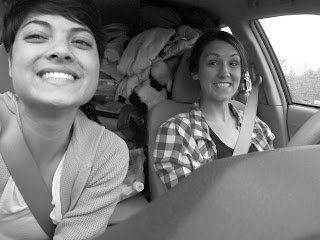 I also have gone dancing more than a few times, met up with people at bars more than I have in the past year, and I joined my best friend on her cross-country move from Massachusetts to Seattle, WA, which means that in driving across the entire country, I've also been in twelve states, and seen people in all of them, including friends from my high school and college days, some family members, and lots and lots and lots of people in tiny towns and cities on I-80. For this trip I left my laptop at home and the only book I brought was my moleskine journal. There's not even the possibility for me to be doing any philosophical work.
After two weeks of doing nothing, I've felt amazingly calm. I haven't been antsy, I haven't felt guilty, and I don't feel like piles and piles of work are mounting (well, to be honest, there's been a little of that...). But I have felt really relaxed and present. I've noticed that my mental space is much clearer and quieter. When I sit outside, I can just sit for hours with a tea and watch what happens around me. Maybe it's because I've been reading so intensely for my comprehensive exams for the past four and a half months, but there is a sense of relief that has come with not filling my mind with the conversations I'm having with other philosophers through a text. And when the silence breaks, it's because I'm having a conversation with another person. You know, the kind were we laugh and get to know one another.
And with this space and time to be with others, do more fun things, and travel across the country, I've noticed a couple of things. My conversations and everyone else's days continue to go on with or without philosophical content being a central part of them. The experience has been grounding and very humbling. In the first week of my "do nothing" break, I was sitting on the patio of the bar that has become my new hang out when someone asked me, "What is the role of philosophy in society today?" and I replied, "That's a really good question." I ask myself that all of the time, after all, that's one of THE questions that motivates my work! But I still don't have a very coherent response to it. And it's a good question because most people aren't exposed to philosophy, and if they are, it isn't usually on very deep levels. And since people's lives seem to continue on just fine without it, it makes sense to question philosophy's role and significance. I get that. For me, it was an important reminder that despite the pressures and expectations of "making it" in Academia and what it takes to make a name for yourself and who the big shots are and how you have to do certain things to be anything like them, the philosophy world is unfortunately insular, especially in America. There are many philosophers who do really good and important and creative and inventive work, but it is also the case that it is often mostly only other philosophers who have access to and value it. But it's fair to ask, is that philosophy's only role?
Today, while reflecting on our cross-country drive in a cafe in Seattle, my friend exclaimed, "There are a lot of people in the world!" I understood what she meant and why there was an element of shock in her recognition of this seemingly obvious fact. Wherever we would drive, wherever we would stop, there were people there; people with their own lives and their own stories and thoughts and hurts and joys and families and goals and struggles...there were people in Dix, Nebraska. Really. When we stopped there to get gas, the woman who was working in the store and the four men who were sitting in chairs talking to her offered me a shot of whiskey. These people and lots of other people like them are out there in the world, and they probably don't give a damn about who my professors are or the books they have written.
I said that these weeks have been humbling, and that is because I am one of the first to emphasize the importance of philosophy on our lives and how we exist in the world, yet over these past two weeks I have allowed myself to deliberately maintain a distance from professional philosophy. And I truly think that it has been a *healthy* distance. This is weird, right? Disconcerting? Maybe. I'm one to argue that philosophy has the capacity to transform us and the world! And despite all of my cynicism about philosophical neologisms, I made up my own word to capture the complexly interrelated nature of life and philosophy and plastered it all around my blog and youtube channel. But after grounding myself in the "everydayness" and reality of non-philosophers, and really enjoying my time there dancing, sitting outside, talking about lots of ridiculous and funny things, should I now insert my foot and eat my words?
I don't know.
Of course I still value philosophy and the role that it plays in my life. And after these two weeks I am nowhere near wanting to relinquish my lifestyle, drop the books forever, and just carry on without philosophy. I actually don't think that I could really even do that because philosophy literally has changed me. But I do have a renewed respect for what life outside of the Academy (for myself and for others) can be like, and I think I have a healthier perspective on my goals in philosophy...they are still just as passionate, but much more modest.
There's one more very important thing to note: In the past two weeks I've been doing a lot of thinking. Not about the arguments and chapters that will go into my dissertation, but about other important life stuff, like relationships, behavioral patterns, understanding myself and my experiences, emotions, and needs better. Rather than thinking about what so-and-so means by some passage of coded language, I've used this time to get to know myself better. The insights that I have gained have been illuminating beyond belief, and as far as self-care and "knowing thyself" goes, I know that I have done more work for styling my own existence in a matter of days then I have by reading 43 books this semester. My own personal learning over these two weeks has been invaluable and I'm referring to insights that will no doubt make me a better, stronger, and healthier person (These "Aha!" moments might just have to wait for another blog post). And I was able to uncover, realize, synthesize, and understand so much precisely because I had given myself the space and time to do so. Yes, philosophy is important and even an important way of caring for our selves, but I guess I'm trying to note that we need to have time to do other things that enable us to care for ourselves in other ways, too.
I'd love to think that doing those other things is itself philosophically significant insofar as it fuels a richer philosophy and makes one a better philosopher...which means that even though I said that I haven't been doing any philosophy and I have started to even wonder about my own term, "philifesophy," this skepticism is probably indicative of an important oversight. Perhaps I somewhere lost touch and misled myself by thinking that the value of philosophy was found in what it offers our lives, that is, how it helps shape and guide and transform us into new subjects. But if it was just that then I would be overemphasizing the idea that philosophy is important for life without giving full acknowledgment of how life is necessary for philosophy.
For these past two weeks, then, I am very grateful that I have had the opportunity to do nothing, which has actually allowed me to do a lot of good living. And perhaps this is the best approach to philosophy after all (I really think that it is).
It feels weird, strangely defiant and indulgent at the same time. And it feels great.
Although I said that I have been doing nothing, that isn't really true. I've been doing lots of things, like sitting on street benches in the sun, sitting outside of cafes, having picnics in parks and sitting in the grass, and sitting on the patios of bars. When people walk by and ask what I am doing, I tell them that I am doing nothing, but obviously I am doing a great deal of sitting.
And talking. When I sit out in public like that doing nothing, people tend to start talking to me. They may even sit with me for just a bit before they carry on with whatever they were doing as part of their day. And because of this, I've met a number of new people in the past couple of weeks, engaged in many, many casual conversations, made some new friends, and reconnected with old ones.
 I also have gone dancing more than a few times, met up with people at bars more than I have in the past year, and I joined my best friend on her cross-country move from Massachusetts to Seattle, WA, which means that in driving across the entire country, I've also been in twelve states, and seen people in all of them, including friends from my high school and college days, some family members, and lots and lots and lots of people in tiny towns and cities on I-80. For this trip I left my laptop at home and the only book I brought was my moleskine journal. There's not even the possibility for me to be doing any philosophical work.
After two weeks of doing nothing, I've felt amazingly calm. I haven't been antsy, I haven't felt guilty, and I don't feel like piles and piles of work are mounting (well, to be honest, there's been a little of that...). But I have felt really relaxed and present. I've noticed that my mental space is much clearer and quieter. When I sit outside, I can just sit for hours with a tea and watch what happens around me. Maybe it's because I've been reading so intensely for my comprehensive exams for the past four and a half months, but there is a sense of relief that has come with not filling my mind with the conversations I'm having with other philosophers through a text. And when the silence breaks, it's because I'm having a conversation with another person. You know, the kind were we laugh and get to know one another.
And with this space and time to be with others, do more fun things, and travel across the country, I've noticed a couple of things. My conversations and everyone else's days continue to go on with or without philosophical content being a central part of them. The experience has been grounding and very humbling. In the first week of my "do nothing" break, I was sitting on the patio of the bar that has become my new hang out when someone asked me, "What is the role of philosophy in society today?" and I replied, "That's a really good question." I ask myself that all of the time, after all, that's one of THE questions that motivates my work! But I still don't have a very coherent response to it. And it's a good question because most people aren't exposed to philosophy, and if they are, it isn't usually on very deep levels. And since people's lives seem to continue on just fine without it, it makes sense to question philosophy's role and significance. I get that. For me, it was an important reminder that despite the pressures and expectations of "making it" in Academia and what it takes to make a name for yourself and who the big shots are and how you have to do certain things to be anything like them, the philosophy world is unfortunately insular, especially in America. There are many philosophers who do really good and important and creative and inventive work, but it is also the case that it is often mostly only other philosophers who have access to and value it. But it's fair to ask, is that philosophy's only role?
 |
| This man is one of those people in Seattle. |
I said that these weeks have been humbling, and that is because I am one of the first to emphasize the importance of philosophy on our lives and how we exist in the world, yet over these past two weeks I have allowed myself to deliberately maintain a distance from professional philosophy. And I truly think that it has been a *healthy* distance. This is weird, right? Disconcerting? Maybe. I'm one to argue that philosophy has the capacity to transform us and the world! And despite all of my cynicism about philosophical neologisms, I made up my own word to capture the complexly interrelated nature of life and philosophy and plastered it all around my blog and youtube channel. But after grounding myself in the "everydayness" and reality of non-philosophers, and really enjoying my time there dancing, sitting outside, talking about lots of ridiculous and funny things, should I now insert my foot and eat my words?
I don't know.
Of course I still value philosophy and the role that it plays in my life. And after these two weeks I am nowhere near wanting to relinquish my lifestyle, drop the books forever, and just carry on without philosophy. I actually don't think that I could really even do that because philosophy literally has changed me. But I do have a renewed respect for what life outside of the Academy (for myself and for others) can be like, and I think I have a healthier perspective on my goals in philosophy...they are still just as passionate, but much more modest.
There's one more very important thing to note: In the past two weeks I've been doing a lot of thinking. Not about the arguments and chapters that will go into my dissertation, but about other important life stuff, like relationships, behavioral patterns, understanding myself and my experiences, emotions, and needs better. Rather than thinking about what so-and-so means by some passage of coded language, I've used this time to get to know myself better. The insights that I have gained have been illuminating beyond belief, and as far as self-care and "knowing thyself" goes, I know that I have done more work for styling my own existence in a matter of days then I have by reading 43 books this semester. My own personal learning over these two weeks has been invaluable and I'm referring to insights that will no doubt make me a better, stronger, and healthier person (These "Aha!" moments might just have to wait for another blog post). And I was able to uncover, realize, synthesize, and understand so much precisely because I had given myself the space and time to do so. Yes, philosophy is important and even an important way of caring for our selves, but I guess I'm trying to note that we need to have time to do other things that enable us to care for ourselves in other ways, too.
I'd love to think that doing those other things is itself philosophically significant insofar as it fuels a richer philosophy and makes one a better philosopher...which means that even though I said that I haven't been doing any philosophy and I have started to even wonder about my own term, "philifesophy," this skepticism is probably indicative of an important oversight. Perhaps I somewhere lost touch and misled myself by thinking that the value of philosophy was found in what it offers our lives, that is, how it helps shape and guide and transform us into new subjects. But if it was just that then I would be overemphasizing the idea that philosophy is important for life without giving full acknowledgment of how life is necessary for philosophy.
For these past two weeks, then, I am very grateful that I have had the opportunity to do nothing, which has actually allowed me to do a lot of good living. And perhaps this is the best approach to philosophy after all (I really think that it is).
Friday, May 6, 2011
My body, be leaves today.
I find myself in the middle, so I see spine thread bare, laced with the flesh of my mind made manifest.
This time, more so than before, the words of others occupied the space leading up to
this place
is a milestone for me, because now I recognize what lies ahead as completely unforeseen.
It's an openness that calls out, "You're free," and the choices to be made hang in the future suns' risings.
Today
It's just dusk
And the birds are all singing.
There are parts of me that couldn't speak coherently about all the metaphoric pools of feelings that have been turning my body, so I think I'll let their conversant chirping fill in for me.
They're speaking about seasons-
how the spring is finally arriving only to be leaving
although the leaves reach out so slowly to the sky that you can hardly perceive them shaking.
Trembling for the heat of the next few months where time is as thick as this valley's humidity,
they're slowly waving it in.
Leaves gain movement from their growing,
what fools mistake for the wind.
That subtle stirring becomes the past and
when viewed through a quickened time lapse
presents itself as a quaking.
Then it seems so amazing that the leaves didn't break away from their branches.
With all that incessant moving you'd think they'd lose track of those skinny little limbs.
It's a good thing Nature's proficient at dancing.
Only the insecure would grasp another's neck in an attempt to hold a pulse back,
since you can't stop what's alive from beating.
One should make like the leaves
and grow a bit wider
to see that instead of your grip,
those veins could have been kissed.
It's surprising what a heart can comprehend by simply being.
It drops a bass line for the fools:
Grace on the dance floor comes when you recognize your breath as the wind.
5.6.11

This time, more so than before, the words of others occupied the space leading up to
this place
is a milestone for me, because now I recognize what lies ahead as completely unforeseen.
It's an openness that calls out, "You're free," and the choices to be made hang in the future suns' risings.
Today
It's just dusk
And the birds are all singing.
There are parts of me that couldn't speak coherently about all the metaphoric pools of feelings that have been turning my body, so I think I'll let their conversant chirping fill in for me.
They're speaking about seasons-
how the spring is finally arriving only to be leaving
although the leaves reach out so slowly to the sky that you can hardly perceive them shaking.
Trembling for the heat of the next few months where time is as thick as this valley's humidity,
they're slowly waving it in.
Leaves gain movement from their growing,
what fools mistake for the wind.
That subtle stirring becomes the past and
when viewed through a quickened time lapse
presents itself as a quaking.
Then it seems so amazing that the leaves didn't break away from their branches.
With all that incessant moving you'd think they'd lose track of those skinny little limbs.
It's a good thing Nature's proficient at dancing.
Only the insecure would grasp another's neck in an attempt to hold a pulse back,
since you can't stop what's alive from beating.
One should make like the leaves
and grow a bit wider
to see that instead of your grip,
those veins could have been kissed.
It's surprising what a heart can comprehend by simply being.
It drops a bass line for the fools:
Grace on the dance floor comes when you recognize your breath as the wind.
5.6.11

Thursday, April 28, 2011
The Latest:Think for a Change Videos
I've been doing more videos! But I haven't posted them here...until now.
"Think for a Change (10): What We Don't Know About Ignorance"
This one is especially important to me. Charles Mills' concept of an epistemology of ignorance flipped my world when I first read about it in 2007. It's stayed in the back of my mind ever since when I learn and read and think about new things...
"Think for a Change (11): Freedom to Think Differently, or At All"
This is why I do philosophy.
"Think for a Change (12): Re: Trans Woman Attacked at McDonald's"
Unfortunately, there have been some recent events that led to recent videos and I just had to say something about this.
Thanks for reading and watching!
"Think for a Change (10): What We Don't Know About Ignorance"
This one is especially important to me. Charles Mills' concept of an epistemology of ignorance flipped my world when I first read about it in 2007. It's stayed in the back of my mind ever since when I learn and read and think about new things...
"Think for a Change (11): Freedom to Think Differently, or At All"
This is why I do philosophy.
"Think for a Change (12): Re: Trans Woman Attacked at McDonald's"
Unfortunately, there have been some recent events that led to recent videos and I just had to say something about this.
Thanks for reading and watching!
Saturday, April 23, 2011
Trust: Treading Water in the Deep

Philosophy: This week I read Jean-Paul Sartre's "Being and Nothingness." As philifesophical serendipity would have it, he has a whole chapter on bad faith, i.e., lying to ourselves.
Life: Lately, I've been listening to Radiolab's podcasts. With some sifting through their shows, I picked this really interesting one on deception to listen to a couple of days ago. I liked the segment on catching liars by noticing micro-facial expressions, and the last piece on self-deception (ahem, little bits of delusion) and how it might relate to personal successes. It actually reminded me of my blog post on Heroic Imaginings and Reality Checks. The middle story about Hope, the charming pathological liar, was fascinating, but it also made me sad to think about the people who trusted and supported her, and how they have struggled to trust people after all of her scams. It's not just that they can't trust others as they might have before, but that they no longer trust their own judgment of people's characters.
This podcast led into numerous conversations with friends about deception and trust, and in these conversations I felt a slight lingering of something weird come up within myself. For a while now I've left open the possibility that I myself am not a good judge of character, even though I would really like to think that I am (more on this second piece in a minute). I haven't slipped into any extreme forms of paranoia or anything, but through numerous experiences I guess, I have a heightened sensitivity to the ways that others can try to hide themselves, their intentions, manipulate situations, control another's emotions or reactions, placate, appease, etc... Perhaps more than usual, over the past year I have remained quite attentive to my doubts and worries over what other people were saying, doing, showing me, and thanks to that attentiveness, I have really worked on putting more energy into trusting people. I guess this is one reason why the vulnerability stuff from my last post speaks to me--trusting others is something I have to consciously work on.
So, to begin, we can wonder why people like me would want to be a good judge of character. I imagine it has something to do with not getting hurt, used, or disrespected. In other words, if you know that someone is a jerk, you know what to expect of them. But if someone seems nice, respectful, admirable even, like someone on whom you can depend, or with whom you can share yourself, to suddenly realize that that trust was misplaced might leave one feeling shocked, betrayed, insecure. That makes some sense, right?
This image came to mind: Meeting someone is like getting into a pool. Once you're in, you know that you're in the pool, but it's not the pool itself that can raise unsettling feelings. It's the depth that matters. I like swimming in pools when I know where the bottom is, when I can touch it with my toes. There's a certain lightness and ease that comes with being in the shallow end, like when you're only in 3 feet of water and you know that it's not going to go any deeper, but I tend to like swimming best when there's a little more depth, more room to explore. Eight feet deep means that the water is over my head if I try to get to the bottom of the pool, but I can still see it from the surface of the water.
But what happens when you get into a pool and realize that it's a pretty deep one and you can't see the bottom? Maybe it's 25 feet deep, or maybe even be more, but now it might be hard to even imagine how deep it actually goes. You can't see the bottom and you don't know what else might be lurking beneath you in the depths of this pool. There's an uneasiness attached to not knowing what surrounds you, what might come up, and that you don't have a bottom surface to ground you. What's worse, imagine that you got into this pool thinking it was six feet deep only to realize once you got in that you couldn't put your foot down and touch the bottom even if you held your breath and tried. This one's deeper that you had anticipated.
So what do you do?
Well, when you find yourself in water that is too deep for you to stand in, you have to tread. In other words, you have to learn to support yourself without having any ground to support you. It requires some skill, rhythm, breathing, technique, and if you do it well, you can tread water for quite a long time. Regardless of whether it's 10 feet or 100 feet of water that you're in, if you can tread, it all feels the same: just water passing around your feet and through your toes. It doesn't really matter where the bottom is.
I think that people can be thought of like pools. Some are shallow, some are deep, and perhaps most people don't even really know the reaches of their depth. Most people probably don't know what you might find in the deepest waters either. If it's the case that people don't know their depth, it's probably not reasonable to expect that they could reveal this to another person("Hi. I'm about 12 feet deep."), let alone expect oneself to be able to see the true measure of their depth by way of our own judgment or perception.
What this metaphor reveals, I think, is that requiring that one have "an accurate judge of character" before placing trust in another person might be missing the point. On one level, if I actually knew your depth and could see the bottom of your pool with clarity, if this constitutes my ability to judge your character, then it wouldn't really be my *trust* that I was giving you. Presumably, I would already seem to *know* you, and there would be less a sense of vulnerability, which is part of what it means to truly trust another. If I proceed in this way and think that I have trusted you, I have done so all in bad faith. I have fooled myself into thinking that I can trust you so that I feel like I do trust you. But already I have canceled out the very possibility for truly trusting.
And on another level, if one's depth and whatever might be lurking down there are some of those things that many people don't even know about themselves, this doesn't mean that we can't still swim in their pools and enjoy it. For the most part, I would like to believe, people do the best that they can, even when they don't know the measure of their depth. In order to make all of this less scary, then, one just needs to learn how to tread on her own so that she can swim, regardless of any pool's (known or unknown) depth.
Tuesday, April 19, 2011
Whole-Hearted Vulnerability
If there is one theme that I have followed in my personal and professional and philosophical life, it is that of vulnerability. Being open and willing to be imperfect, to be dependent on and affected by others, to recognize that we are shaped by our experiences and that we close ourselves off to those experiences when we seek to control everything, especially in the effort to avert "difficult," "hard," or even painful emotions--this is the stuff of life.
For the past few months, I have been reading philosophical texts on embodiment, phenomenology, and affect. I am studying notions of intercorporeal existence, authentic love and radical generosity in the face of alterity, and psychosomatic examples of aphasia as not just a refusal to speak, but a more existential refusal of the ontological relations we have with others and the world. In other words, we are not independent, autonomous, isolated beings who can be characterized as pure minds or mechanistic machine-bodies. Rather, we exist--in body, mind, psyche, and even biochemically--in relation to others, history, culture, nature, and the world. When the conversation turns to ethics, many philosophers suggest that this leads us to notions of freedom, responsibility, and forgiveness.
All of this reminds me of my thought process during the summer before coming to graduate school. As I was familiarizing myself with theories in feminist philosophy and more "Continental" thinkers like the existentialists, there was a distinct moment when I thought, "Hasn't all of this stuff on interrelationality already been said, like thousands of years ago?" I was pretty sure that it had been, at least by one person (Seriously, though, I know there are many more).
Over 2,500 years ago, the Buddha's key insights were that nothing is permanent and all things are interdependent. This means that there is a transitory nature to reality and everything that *is* comes out of a conditional, dependent arising. There is nothing eternal, independent, or separate--no soul, no essence, no simple "I" to be found. Once again, I will say that I am grateful that I was assigned to teach "Asian Philosophies" this semester, in part because I am able to have conversations with my students about what these insights mean for us in terms of our daily lives. We've talked about reframing our values, our participation in global economic markets, and even our conceptions of mental health by way of non-attachment, compassionate understanding, "seeing more clearly" the nature of things, and bearing witness to the parts of life that often lead us into dis-ease, anxiety, fear, and unhappiness--the hard facts like sickness, old age, and death. We talk about alleviating "dukkha," which is very roughly translated as "suffering," through compassion, wisdom, and non-attachment. Through practicing a bit of mindfulness and meditation, we have tried to recognize when we are motivated out of fear, aversion, confusion, or craving, even as students who need good grades to get good jobs, or boyfriends and girlfriends who might get cheated on, or (like me) food lovers who have to face that the key-lime gelato simply can't last forever. It's been a good class. I've learned a lot.
And now, I finally had time to watch this video. Some of my more "whole-hearted" friends and family members were passing it around a couple of months ago, but the delay in my viewing is not important. The message is still a good one. She's not a Continentalist philosopher who speaks with impenetrable language, and she's probably not enlightened like the Buddha, but I do think that she, as a social worker, is touching on something very fundamental about our human experiences. Turns out there may be many paths to some basics of life.
As Dr. Brene Brown notes, we live best when we feel loved, worthy, and connected to others. And yet, this is hard because it requires that we also make ourselves vulnerable. In fact, we have to face that vulnerability with an honest, courageous authenticity. And when our vulnerability enables us to feel gratitude, joy, and love in life, it also means that we must risk feeling other emotions as well, including disappointment, rejection, and being misunderstood.
Maybe there is some comfort in knowing that almost all of the people who think on this theme seem to agree on one thing: Ironically enough, it is by making oneself vulnerable that one finds the strength to deal with more difficult experiences. And more ironic still, if one's strength stems from vulnerability, one might actually be met with even greater love, belonging, and connection with others, which in turn might make even the most difficult experiences in life more manageable, or less difficult.
As great as this is, I wonder how much the less "whole-hearted" get it? Especially after trying to talk to a room of thirty 19-21 year olds for the past thirteen weeks about these ideas and frequently having to myself admit that I have hit some brick pedagogical walls when they admit that they just don't get it, these insights seem less like the kind of stuff that can be taught. We can talk about it, but that does not mean that it will be heard and understood, although I wish it would. I have the sense that these sort of things have to be figured out and experienced for oneself. And that might take some time. Probably more than a semester. Perhaps even a lifetime.
So, here's to the practice and the journey!
For the past few months, I have been reading philosophical texts on embodiment, phenomenology, and affect. I am studying notions of intercorporeal existence, authentic love and radical generosity in the face of alterity, and psychosomatic examples of aphasia as not just a refusal to speak, but a more existential refusal of the ontological relations we have with others and the world. In other words, we are not independent, autonomous, isolated beings who can be characterized as pure minds or mechanistic machine-bodies. Rather, we exist--in body, mind, psyche, and even biochemically--in relation to others, history, culture, nature, and the world. When the conversation turns to ethics, many philosophers suggest that this leads us to notions of freedom, responsibility, and forgiveness.
All of this reminds me of my thought process during the summer before coming to graduate school. As I was familiarizing myself with theories in feminist philosophy and more "Continental" thinkers like the existentialists, there was a distinct moment when I thought, "Hasn't all of this stuff on interrelationality already been said, like thousands of years ago?" I was pretty sure that it had been, at least by one person (Seriously, though, I know there are many more).
Over 2,500 years ago, the Buddha's key insights were that nothing is permanent and all things are interdependent. This means that there is a transitory nature to reality and everything that *is* comes out of a conditional, dependent arising. There is nothing eternal, independent, or separate--no soul, no essence, no simple "I" to be found. Once again, I will say that I am grateful that I was assigned to teach "Asian Philosophies" this semester, in part because I am able to have conversations with my students about what these insights mean for us in terms of our daily lives. We've talked about reframing our values, our participation in global economic markets, and even our conceptions of mental health by way of non-attachment, compassionate understanding, "seeing more clearly" the nature of things, and bearing witness to the parts of life that often lead us into dis-ease, anxiety, fear, and unhappiness--the hard facts like sickness, old age, and death. We talk about alleviating "dukkha," which is very roughly translated as "suffering," through compassion, wisdom, and non-attachment. Through practicing a bit of mindfulness and meditation, we have tried to recognize when we are motivated out of fear, aversion, confusion, or craving, even as students who need good grades to get good jobs, or boyfriends and girlfriends who might get cheated on, or (like me) food lovers who have to face that the key-lime gelato simply can't last forever. It's been a good class. I've learned a lot.
And now, I finally had time to watch this video. Some of my more "whole-hearted" friends and family members were passing it around a couple of months ago, but the delay in my viewing is not important. The message is still a good one. She's not a Continentalist philosopher who speaks with impenetrable language, and she's probably not enlightened like the Buddha, but I do think that she, as a social worker, is touching on something very fundamental about our human experiences. Turns out there may be many paths to some basics of life.
As Dr. Brene Brown notes, we live best when we feel loved, worthy, and connected to others. And yet, this is hard because it requires that we also make ourselves vulnerable. In fact, we have to face that vulnerability with an honest, courageous authenticity. And when our vulnerability enables us to feel gratitude, joy, and love in life, it also means that we must risk feeling other emotions as well, including disappointment, rejection, and being misunderstood.
Maybe there is some comfort in knowing that almost all of the people who think on this theme seem to agree on one thing: Ironically enough, it is by making oneself vulnerable that one finds the strength to deal with more difficult experiences. And more ironic still, if one's strength stems from vulnerability, one might actually be met with even greater love, belonging, and connection with others, which in turn might make even the most difficult experiences in life more manageable, or less difficult.
As great as this is, I wonder how much the less "whole-hearted" get it? Especially after trying to talk to a room of thirty 19-21 year olds for the past thirteen weeks about these ideas and frequently having to myself admit that I have hit some brick pedagogical walls when they admit that they just don't get it, these insights seem less like the kind of stuff that can be taught. We can talk about it, but that does not mean that it will be heard and understood, although I wish it would. I have the sense that these sort of things have to be figured out and experienced for oneself. And that might take some time. Probably more than a semester. Perhaps even a lifetime.
So, here's to the practice and the journey!
Wednesday, April 6, 2011
The End of the World: Undertaking Whatever is Hardest
This reflection was written in response to a paper by Ladelle McWhorter, which she presented at Penn State last week for a conference that honored the work of Charles Scott.
Reflecting on Charles Scott’s role as one of her most influential teachers, Ladelle McWhorter focused her paper, “Whatever is Hardest,” on the ethical question of teaching. Looking back on her own experiences in Scott’s classes, McWhorter described Scott’s practice of philosophy as one that enacts an experience and creates a philosophical event. It is a practice that opens up possibilities for seeing, feeling, and thinking. While describing her experiences of sitting through his lectures, McWhorter reflected that “something philosophical had happened to me.” This, she explains, is because Scott’s practice of philosophy is a kind of undertaking that requires a willingness to turn toward that which we do not know and what we fear that we will never understand. It is a willingness to turn toward and stand with the excess, with whatever is hardest.
Teaching undergraduate students is hard. It may even be one of the hardest things to do because, as McWhorter noted, one of the central goals of teaching is to make students aware of their intellectual and ethical freedom, that is, to make thinking in general and thinking on particular questions possible again. Nearly any teacher can attest to just how challenging it can be to get students thinking, and thinking freely. To make things even harder still, McWhorter discussed her recent experiences of teaching environmental ethics to her students. The difficulty of this task does not stem from the controversy of intrinsic value or anthropocentrism, but rather from the fact that if one pays attention to the consequences of human production and consumption and the state of our planet’s water, ground, and atmosphere, one has to face the gravity of our environmental crisis. The thousands of poisonous toxins in our ecosystems and bodies, the increase in cancer rates, sea-level rise, thawing permafrost, gigatons of carbon dioxide being released into the atmosphere, and the utter necessity of petroleum to power anything and everything in our current lifestyles, all of this leads to what was frequently referred to as “impending catastrophes of epic proportions.” Acknowledging these statistics and likelihoods while taking on the responsibility to teach young minds and answer their questions of “What do we do?” in the face of Armageddon, doomsday, the end of life as we know it—this is hard, perhaps one of the hardest things to do.
Before I continue on with the rest of McWhorter’s paper, it is worth noting what was coming up for me as I listened. While sitting through her descriptions of the very sad and scary state of affairs in which we live, it was hard not to feel at least a little bit overwhelmed, if not completely panicked. Thanks to her diligent research, McWhorter was able to paint a detailed picture with facts and numbers (often too large in size and effect to really comprehend) that illustrated the interrelated risks which threaten our lives and the planet. It must have been about forty-five minutes of relentless evidence explaining how we are hopelessly doomed because even if we deal with poison in the water, we still have to worry about rising temperatures, and so on... The magnitude of our problems, the level of crisis facing our planet, is so large and so great that describing these “impending catastrophes of epic proportions” as “the end of the world” would be no exaggeration. I can imagine how the sheer act of sitting through her paper could easily have been enough to put some people over the edge.
But as I started to shift around in my seat and feel my palms sweat, exchanging nervous glances with those next to me, I couldn’t help but notice that it was really hard to sit through McWhorter’s paper. It was hard because her descriptions put us face to face with the most difficult realities, the most terrifying statistics, and the most uncertain of futures. Much like her descriptions of Scott’s lectures, McWhorter’s paper gave me the distinct sense that “something philosophical” was happening to us. And as if this one-hour paper paralleled the experiences of her class on environmental ethics, I found myself echoing her students and wanting to ask, “What do we do? What can we do? What should we do?” When McWhorter described her answers to her students, it seemed that now they were also appropriately directed to us, those in the audience who evidenced a willingness to turn toward these difficult realities and a future full of frightful uncertainties. She said, “I don’t know.”
It was at this point when McWhorter returned to the ethical question of teaching. When the future of the world is not going to be the same for her students as it was for previous generations, different even from their parents’ and professors’ generations, what might teaching be at this juncture? McWhorter even wonders if it is wrong to lead her students in the environmental ethics class to the end of this road, where they stand together and look out onto a future without being able to see how it looks, perhaps if it is even there.
These questions are interesting for me because as McWhorter described a type of “border” relationship that separates her from her undergraduate students—they belong to the future in a different way than she does—I immediately recognized myself as living on the border. I am part of this generation that is growing up in the face of what is yet to come, but I also have my own students to whom I feel responsible to equip for the future. With the double weight of student and teacher on my shoulders, I listened closely to what McWhorter said next.
McWhorter offered her students (and me, and perhaps even my students through me) this much: You will have to live and face the unimaginable. We can’t prepare you for the challenges and problems that you will have to meet and try to overcome. Don’t let your parents and your teachers dictate your choices. In short, you’re free.
With a moment to let the words sink in, I felt something. Better? Not really. But I did feel something. Something philosophical? There was a moment, I guess, and in that moment I had the increased sense that teaching at the turn of the 21st century is an especially unique task. But there was something more. I know that I am not only teaching, but I am also a student. I am also learning. And the freedom involved in teaching and learning in this moment is a freedom of release, of openness, of possibility. It’s not just a freedom to vote or a power to choose to live green, but a different kind of freedom, grounded in contingency, and with that, not-knowing.
I can’t help but agree that one of the most important goals of teaching is to make students aware of their intellectual and ethical freedom, to make thinking possible again. This was one of the most significant reminders that I gained from listening to McWhorter’s paper, in part because it reminded me that my own thinking is also free. But I can’t forget that the paper was written and presented to honor the work of her own teacher, Charles Scott, especially in celebration of his practice of philosophy, a practice that pursues whatever is hardest. So maybe, after all of this, I actually was feeling a bit better. I was feeling better because for that hour I was put back in a place of acknowledging that I am also a part of a "lineage" of sorts of people who seek to embrace how studying and teaching philosophy as a transformative practice can open up new ways of seeing, thinking, and feeling. Approached in this way, philosophy is already an ethical undertaking. And there is something important contained within that attitude and approach. Part of me was relieved to know that I am shaped by and following in the footsteps of others, that despite the hugeness of it all, there is a way to move in the world. So, in addition to freedom and a bit of philosophical company, one might also find there a small sense of hope.
Reflecting on Charles Scott’s role as one of her most influential teachers, Ladelle McWhorter focused her paper, “Whatever is Hardest,” on the ethical question of teaching. Looking back on her own experiences in Scott’s classes, McWhorter described Scott’s practice of philosophy as one that enacts an experience and creates a philosophical event. It is a practice that opens up possibilities for seeing, feeling, and thinking. While describing her experiences of sitting through his lectures, McWhorter reflected that “something philosophical had happened to me.” This, she explains, is because Scott’s practice of philosophy is a kind of undertaking that requires a willingness to turn toward that which we do not know and what we fear that we will never understand. It is a willingness to turn toward and stand with the excess, with whatever is hardest.
Teaching undergraduate students is hard. It may even be one of the hardest things to do because, as McWhorter noted, one of the central goals of teaching is to make students aware of their intellectual and ethical freedom, that is, to make thinking in general and thinking on particular questions possible again. Nearly any teacher can attest to just how challenging it can be to get students thinking, and thinking freely. To make things even harder still, McWhorter discussed her recent experiences of teaching environmental ethics to her students. The difficulty of this task does not stem from the controversy of intrinsic value or anthropocentrism, but rather from the fact that if one pays attention to the consequences of human production and consumption and the state of our planet’s water, ground, and atmosphere, one has to face the gravity of our environmental crisis. The thousands of poisonous toxins in our ecosystems and bodies, the increase in cancer rates, sea-level rise, thawing permafrost, gigatons of carbon dioxide being released into the atmosphere, and the utter necessity of petroleum to power anything and everything in our current lifestyles, all of this leads to what was frequently referred to as “impending catastrophes of epic proportions.” Acknowledging these statistics and likelihoods while taking on the responsibility to teach young minds and answer their questions of “What do we do?” in the face of Armageddon, doomsday, the end of life as we know it—this is hard, perhaps one of the hardest things to do.
Before I continue on with the rest of McWhorter’s paper, it is worth noting what was coming up for me as I listened. While sitting through her descriptions of the very sad and scary state of affairs in which we live, it was hard not to feel at least a little bit overwhelmed, if not completely panicked. Thanks to her diligent research, McWhorter was able to paint a detailed picture with facts and numbers (often too large in size and effect to really comprehend) that illustrated the interrelated risks which threaten our lives and the planet. It must have been about forty-five minutes of relentless evidence explaining how we are hopelessly doomed because even if we deal with poison in the water, we still have to worry about rising temperatures, and so on... The magnitude of our problems, the level of crisis facing our planet, is so large and so great that describing these “impending catastrophes of epic proportions” as “the end of the world” would be no exaggeration. I can imagine how the sheer act of sitting through her paper could easily have been enough to put some people over the edge.
But as I started to shift around in my seat and feel my palms sweat, exchanging nervous glances with those next to me, I couldn’t help but notice that it was really hard to sit through McWhorter’s paper. It was hard because her descriptions put us face to face with the most difficult realities, the most terrifying statistics, and the most uncertain of futures. Much like her descriptions of Scott’s lectures, McWhorter’s paper gave me the distinct sense that “something philosophical” was happening to us. And as if this one-hour paper paralleled the experiences of her class on environmental ethics, I found myself echoing her students and wanting to ask, “What do we do? What can we do? What should we do?” When McWhorter described her answers to her students, it seemed that now they were also appropriately directed to us, those in the audience who evidenced a willingness to turn toward these difficult realities and a future full of frightful uncertainties. She said, “I don’t know.”
It was at this point when McWhorter returned to the ethical question of teaching. When the future of the world is not going to be the same for her students as it was for previous generations, different even from their parents’ and professors’ generations, what might teaching be at this juncture? McWhorter even wonders if it is wrong to lead her students in the environmental ethics class to the end of this road, where they stand together and look out onto a future without being able to see how it looks, perhaps if it is even there.
These questions are interesting for me because as McWhorter described a type of “border” relationship that separates her from her undergraduate students—they belong to the future in a different way than she does—I immediately recognized myself as living on the border. I am part of this generation that is growing up in the face of what is yet to come, but I also have my own students to whom I feel responsible to equip for the future. With the double weight of student and teacher on my shoulders, I listened closely to what McWhorter said next.
McWhorter offered her students (and me, and perhaps even my students through me) this much: You will have to live and face the unimaginable. We can’t prepare you for the challenges and problems that you will have to meet and try to overcome. Don’t let your parents and your teachers dictate your choices. In short, you’re free.
With a moment to let the words sink in, I felt something. Better? Not really. But I did feel something. Something philosophical? There was a moment, I guess, and in that moment I had the increased sense that teaching at the turn of the 21st century is an especially unique task. But there was something more. I know that I am not only teaching, but I am also a student. I am also learning. And the freedom involved in teaching and learning in this moment is a freedom of release, of openness, of possibility. It’s not just a freedom to vote or a power to choose to live green, but a different kind of freedom, grounded in contingency, and with that, not-knowing.
I can’t help but agree that one of the most important goals of teaching is to make students aware of their intellectual and ethical freedom, to make thinking possible again. This was one of the most significant reminders that I gained from listening to McWhorter’s paper, in part because it reminded me that my own thinking is also free. But I can’t forget that the paper was written and presented to honor the work of her own teacher, Charles Scott, especially in celebration of his practice of philosophy, a practice that pursues whatever is hardest. So maybe, after all of this, I actually was feeling a bit better. I was feeling better because for that hour I was put back in a place of acknowledging that I am also a part of a "lineage" of sorts of people who seek to embrace how studying and teaching philosophy as a transformative practice can open up new ways of seeing, thinking, and feeling. Approached in this way, philosophy is already an ethical undertaking. And there is something important contained within that attitude and approach. Part of me was relieved to know that I am shaped by and following in the footsteps of others, that despite the hugeness of it all, there is a way to move in the world. So, in addition to freedom and a bit of philosophical company, one might also find there a small sense of hope.
Subscribe to:
Posts (Atom)